GEAR
What to Wear Coasteering
2/4/20264 min read
---
slug: coasteering-gear
title: "What to Wear Coasteering"
---
What to Wear Coasteering
Coasteering in Wales is an unforgettable experience, scrambling and swimming along rugged coastlines. Here's what you actually need, focusing on practicality and the specific conditions you'll face here.
The Essentials
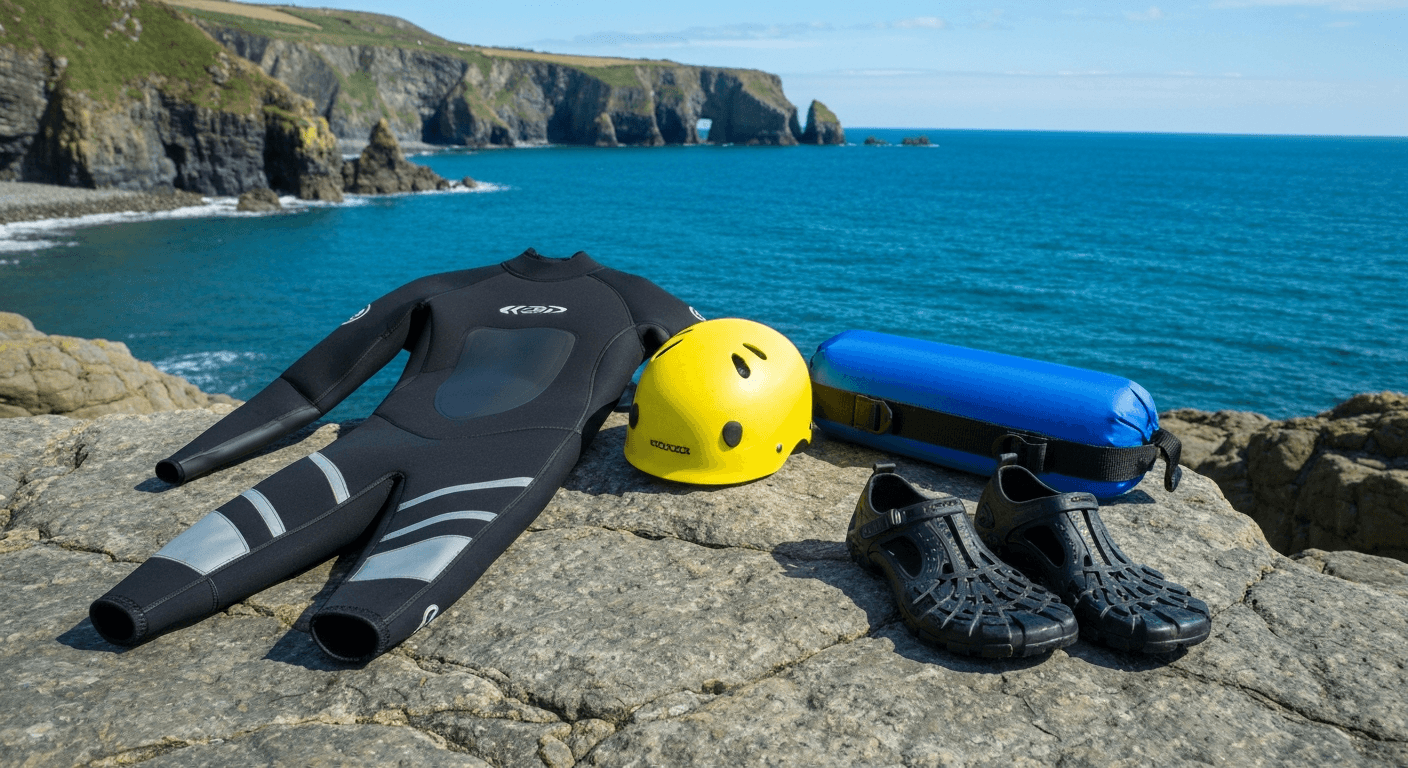
- Wetsuit (Full Length, 5mm recommended): Absolutely critical. The Welsh waters are cold, even in summer. A full-length wetsuit provides essential insulation to prevent hypothermia, allowing you to enjoy the experience safely for a longer period. 5mm is the sweet spot – warm enough without being too restrictive for swimming.
- Buoyancy Aid (BA): A non-negotiable safety item. Coasteering involves swimming, and a BA keeps you afloat, conserving energy and preventing panic, especially in choppy conditions or if you're a less confident swimmer. Reputable coasteering operators will always provide these, but if you are going alone, do not skip this vital piece of equipment.
- Helmet: Protection from rocks is crucial. Welsh coastlines are rocky and unforgiving. A helmet safeguards your head from bumps and scrapes during scrambles and potential impacts while swimming near rocks.
- Sturdy Footwear (Old Trainers or Coasteering Shoes): Protects your feet and provides grip. Sharp barnacles, slippery seaweed, and uneven terrain are common. Old trainers with good grip are ideal. Coasteering-specific shoes are even better, offering enhanced grip and ankle support. No flip-flops or bare feet!
- Swimsuit or Quick-Drying Underwear: To wear beneath the wetsuit. Avoid cotton as it holds water and stays cold.
- Towel and Warm Clothes for Afterwards: You'll be wet and likely a bit cold after your coasteering adventure. Warm, dry clothes are essential for recovery.
Nice to Have
- Wetsuit Gloves (3mm): While not essential, gloves significantly improve comfort in colder waters. They protect your hands from the cold and sharp rocks.
- Wetsuit Boots/Socks (3-5mm): Similar to gloves, boots/socks enhance warmth and prevent blisters from footwear rubbing. Especially good if your chosen footwear isn't designed for water sports.
- Rash Vest: Provides a thin layer of insulation and reduces chafing under the wetsuit. Particularly useful if you have sensitive skin.
- Waterproof Camera (GoPro or Similar): Captures the incredible scenery and adrenaline-fueled moments. Ensure it's securely attached to you.
- Dry Bag (Small): For storing essential items like keys or a phone, but be mindful that you'll be swimming.
- Sunscreen: Even on overcast days, UV rays can penetrate. Protect exposed skin, especially your face.
Don't Bother With
- Expensive Jewelry: Leave it at home. It's likely to get lost or damaged.
- Cotton Clothing (Under Wetsuit): As mentioned, cotton retains water and makes you colder.
- Bulky Backpacks: They'll get in the way and make swimming difficult and potentially dangerous.
- Anything You're Worried About Losing/Damaging: Coasteering is a rugged activity.
Hire vs Buy
- Wetsuit, Buoyancy Aid, Helmet: Hiring these locally is generally the best option, especially for beginners. Reputable coasteering operators provide well-maintained, appropriate-sized gear. You also avoid the cost of purchasing potentially bulky items you might only use occasionally.
- Footwear: If you plan on coasteering regularly, investing in a pair of dedicated coasteering shoes is worthwhile. Otherwise, using old trainers is perfectly adequate.
- Gloves/Boots/Socks: These are relatively inexpensive and can be worth buying if you coasteer often and are sensitive to the cold.
- Camera: If you want good quality footage, buy or hire something like a GoPro. If you are looking for an underwater disposable camera, you are more likely to be disappointed.
Wales-Specific Tips
- Weather is Unpredictable: Be prepared for sudden changes in conditions. Welsh weather can be notoriously fickle. Check the forecast before you go, but be ready for rain, wind, and sunshine, potentially all in the same day.
- Tidal Range is Significant: Be aware of the tides. Welsh coastlines have a large tidal range, which can dramatically alter the coasteering route and make some areas inaccessible or dangerous at certain times. Go with a professional guide unless you are experienced and informed.
- Rocky Coastlines: The terrain is generally more rugged and rocky than some other coasteering locations. Sturdy footwear and a helmet are essential.
- Water Temperature: The Irish Sea is cold! Even in summer, the water temperature rarely exceeds 15°C (59°F). A good quality wetsuit is essential for comfort and safety.
- Sea Conditions: Check sea conditions. Winds can pick up suddenly and the sea state can go from calm to rough in a short space of time.