Coasteering Safety
---
slug: coasteering-safety
title: "Coasteering Safety"
activity: "Coasteering"
---
Coasteering Safety
Coasteering in Wales offers an exhilarating way to experience the rugged coastline, combining swimming, scrambling, and jumping into the sea. While it’s an incredibly fun and rewarding activity, it’s crucial to understand the inherent risks and take necessary precautions to ensure a safe and memorable adventure.
Safety is paramount. The unpredictable nature of the sea, combined with the challenging terrain, demands respect and careful planning. With the right knowledge, equipment, and a responsible approach, coasteering can be enjoyed safely by individuals of varying fitness levels and experience.
Key Risks
Slippery Rocks
The intertidal zone is often covered in algae and seaweed, making rocks extremely slippery. A misplaced step can lead to falls and potential injuries like scrapes, bruises, or even broken bones.
Mitigation: Wear appropriate footwear with good grip specifically designed for coasteering. Move slowly and deliberately, testing your footing before committing your weight. Avoid stepping on areas covered in thick seaweed.
Strong Currents & Swells
Tidal currents and swells can be surprisingly powerful, particularly around headlands and in narrow channels. These forces can quickly exhaust swimmers and sweep individuals away from the shoreline.
Mitigation: Always coasteer with a qualified and experienced guide who understands local tidal conditions and currents. Stay close to the shore and be aware of escape routes. If caught in a current, swim perpendicular to it rather than directly against it, aiming to reach calmer water. Listen to your guide's instructions carefully.
Impact Injuries from Jumps
Jumping into the sea is a core part of coasteering, but it carries the risk of impact injuries if not done correctly. Hitting the water at the wrong angle or misjudging the depth can lead to sprains, fractures, or even more serious injuries.
Mitigation: Only jump from heights that you are comfortable with. Always check the depth and for any submerged obstacles before jumping. Jump feet first with your legs slightly bent and your arms close to your body. Follow the instructions of your guide, who will assess the jump and provide guidance.
Before You Go
- Check the Weather and Tides: Understand the forecast for wind, waves, and rain. Be aware of the tidal times and the state of the tide, as this will significantly impact the conditions.
- Assess Your Fitness: Coasteering requires a reasonable level of fitness and swimming ability. Be honest about your capabilities and choose a route appropriate for your skill level.
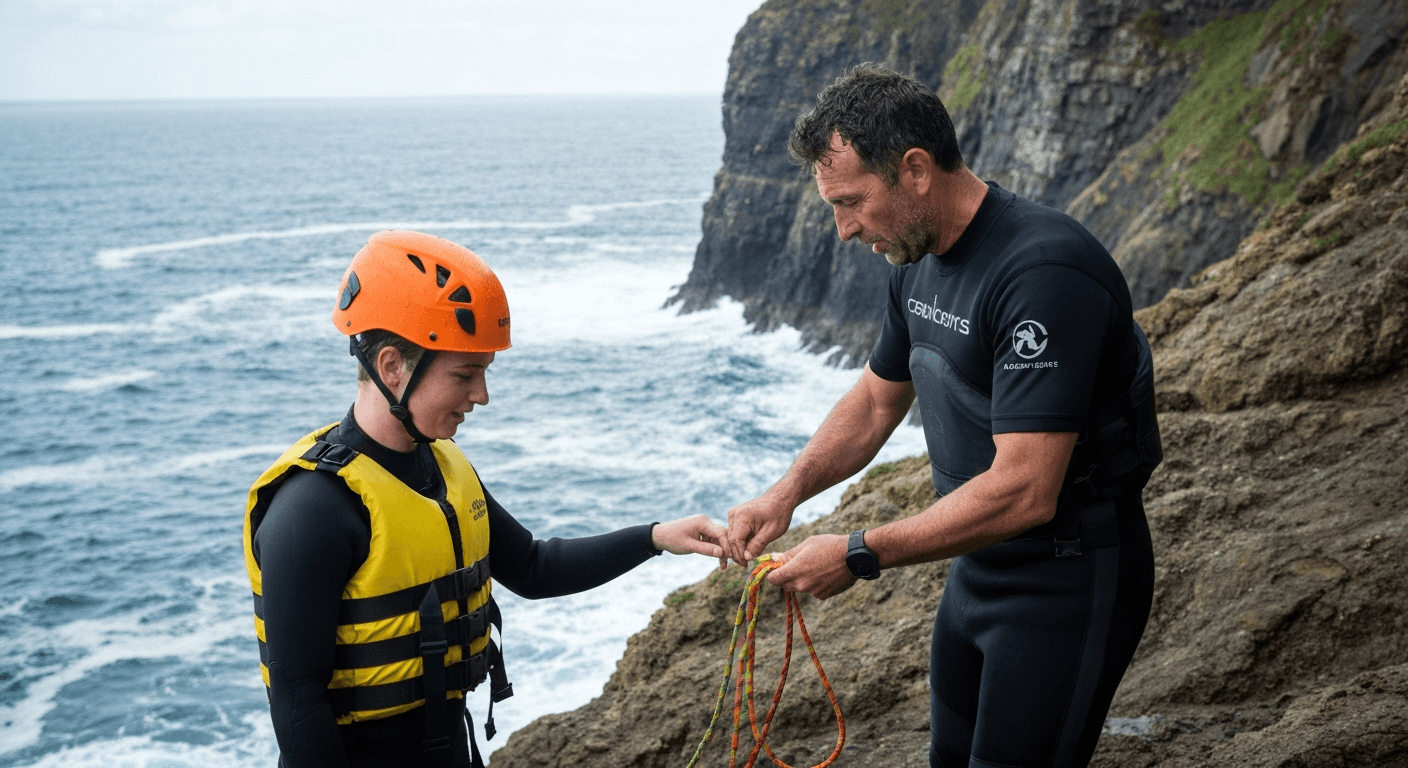
- Wear Appropriate Gear: Use a well-fitted buoyancy aid (PFD) to help you float, and wear a wetsuit to protect you from the cold. Sturdy, grippy footwear is essential for navigating slippery rocks. A helmet is also recommended, especially if jumping.
- Inform Someone of Your Plans: Tell a friend or family member where you are going, what route you are taking, and when you expect to be back.
During Your Activity
- Listen to Your Guide: Your guide is there to ensure your safety and provide expert advice. Follow their instructions carefully and ask questions if you are unsure about anything.
- Stay Aware of Your Surroundings: Be mindful of the changing sea conditions, potential hazards, and the location of your group. Constantly assess your footing and watch out for incoming waves.
- Communicate with Your Group: Let your guide or fellow coasteerers know if you are feeling tired, cold, or uncomfortable. If you spot a hazard, alert others immediately.
Emergency Procedures
If Something Goes Wrong
Stay calm and assess the situation. If someone is injured, provide first aid if possible and call for help immediately. If you are caught in a current or wave, try to swim parallel to the shore to escape its pull. If you are in danger, signal for help by waving your arms or shouting.
Emergency Contacts
- Mountain Rescue: 999 (ask for Police, then Mountain Rescue)
- Coastguard: 999 (ask for Coastguard)
- General Emergency: 999 or 112
Choosing a Safe Operator
Look for coasteering operators that are fully licensed and insured. Check that their guides are qualified and experienced, holding certifications from recognized bodies like the British Canoeing (BC) or similar organizations. Read reviews from previous customers to get an idea of their safety record and customer service. A reputable operator will provide comprehensive safety briefings and ensure that all participants have appropriate equipment.
Weather Considerations
Avoid coasteering during periods of high winds, heavy rain, or rough seas. Strong winds can make it difficult to swim and navigate, while heavy rain can reduce visibility and make rocks even more slippery. Large swells and breaking waves can create dangerous conditions, particularly around headlands and rocky outcrops. If the weather conditions are unfavorable, postpone your coasteering trip.
The Bottom Line
Coasteering is an amazing way to explore the Welsh coastline. By understanding the risks, taking appropriate precautions, and choosing a reputable operator, you can ensure a safe and unforgettable experience. Remember, preparation and respect for the sea are key to a successful and enjoyable coasteering adventure.